
AI and the Future of Work
-

Episode Number : 318
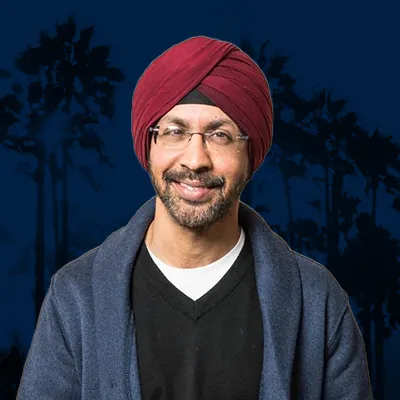
Prakash Arunkundrum is the Chief Operating Officer at Logitech, a $14 billion market cap company with over 7,300
Show moreShow lessPrakash Arunkundrum is the Chief Operating Officer at Logitech, a $14 billion market cap company with over 7,300 employees globally. With a broad range of responsibilities, Prakash oversees the company’s operations, including global manufacturing, supply chain, customer experience, and quality operations. He also serves as General Manager of one of Logitech’s business units and leads the strategy for the company’s environmental sustainability initiatives. Prakash, who joined Logitech in 2015, has a rich background in management consulting, having held executive positions at Kearney and PricewaterhouseCoopers. He is also an architect of Logitech’s AI strategy and a sought-after speaker on AI and the future of computing.
In this conversation, we discuss:
- How Logitech is positioned at the intersection of AI and daily life, providing the input layer for AI models through audio, video, and content.
- Logitech’s commitment to sustainability, focusing on reducing the environmental impact of devices and using AI to optimize energy efficiency.
- The potential of AI to automate repetitive tasks, allowing humans to focus on creative and intuitive work.
- The philosophy of responsible AI, emphasizing fairness, transparency, and accountability in its development.
- The global culture at Logitech that fosters innovation, diversity, and seamless user experiences.
- Prakash’s leadership style as a pragmatic strategist who values data, empathy, and people-first results.
Resources
Subscribe to the AI & The Future of Work Newsletter: https://aiandwork.beehiiv.com/subscribe
Connect with Prakash on LinkedIn: https://www.linkedin.com/in/prakasharunkundrum/
On Generative AI Businesses That Are Getting Investor Dollars: https://podcasts.apple.com/us/podcast/naomi-and-derek-investors-at-menlo-ventures-on/id1476885647?i=1000654677763
-
Episode Number : 316
Punit Soni is the CEO of Suki, a voice-based digital assistant revolutionizing clinician-patient communication. Under his leadership, Suki
Show moreShow lessPunit Soni is the CEO of Suki, a voice-based digital assistant revolutionizing clinician-patient communication. Under his leadership, Suki has raised $165 million, including a recent $70 million in Series D funding. Punit is also a prolific angel investor and previously served as Chief Product Officer at Flipkart, India’s largest e-commerce company. His career includes significant roles in tech leadership at Google and Motorola Mobility. Punit holds an MBA from Wharton and a Master’s in Electrical Engineering from the University of Wyoming.
In this conversation, we discuss:
- The impact of AI on healthcare and its potential to reshape the industry.
- Punit’s vision for a decentralized and more efficient healthcare system powered by AI.
- The shift from traditional interfaces to voice-based, ambient AI interactions in healthcare.
- How Suki is making clinical documentation and administrative tasks more efficient for clinicians.
- The future of healthcare tech as an invisible assistant, allowing clinicians to focus on patient care.
- The importance of transparency in AI-driven healthcare technologies.
Resources
-
Episode Number : 315
Tony Stubblebine is the CEO of Medium, the widely popular publishing platform that recently surpassed 1 million subscribers.
Show moreShow lessTony Stubblebine is the CEO of Medium, the widely popular publishing platform that recently surpassed 1 million subscribers. A serial entrepreneur, Tony is also the founder of habit coaching companies Coach.me and Lyft Worldwide and is the publisher of Better Humans on Medium. He is a passionate advocate for writers and a frequent speaker on the intersection of human creativity and technology, emphasizing why bots won’t replace human ingenuity. Tony holds a BA in Computer Science from Grinnell College, where he proudly supports the Pioneers.
In this conversation, we discuss:
- How Medium’s recommendation system was overhauled under Tony’s leadership to prioritize human curation over algorithmic popularity, creating a platform that values thoughtful content.
- The transformative decision to adopt a subscription-based model, allowing Medium to focus on delivering content readers are happy to pay for, rather than relying on ad-driven engagement.
- The balance between human curation and algorithms in delivering a “sane, thoughtful, and informed” reading experience that supports both freedom and quality.
- Medium’s mission to deepen readers’ understanding by emphasizing human wisdom over pure knowledge, highlighting the importance of life experience in creating impactful content.
- Why Medium minimizes the presence of AI-generated content, focusing instead on curating thoughtful and valuable human contributions for its readers.
- Tony’s perspective on fixing the “broken Internet” by proving that business models focused on delivering value, rather than grabbing attention, can be successful and sustainable.
Resources
-
Episode Number : 313
Dr. Mike Schuster is the head of the AI Core team at Two Sigma, where he leads engineers
Show moreShow lessDr. Mike Schuster is the head of the AI Core team at Two Sigma, where he leads engineers and quantitative researchers in advancing AI technologies across the firm’s investment strategies and internal efficiencies. With over 25 years of expertise in machine learning and deep learning, Mike has been at the forefront of AI trends in tech and finance. Prior to Two Sigma, he spent 12 years at Google, contributing to transformative projects like Google Translate as part of the Google Brain team. Dr. Schuster holds a PhD in Electrical Engineering from the Nara Institute of Science and Technology in Japan and is recognized as a pioneer whose work has significantly shaped the AI landscape.
In this conversation, we discuss:
- The challenges and importance of building collaborative teams for complex AI systems in finance.
- Key differences between developing AI technologies in tech companies like Google versus finance firms like Two Sigma.
- The evolution of neural networks and their transformative impact on applications like Google Translate.
- The ethical considerations and risks of using AI in finance compared to other industries.
- Insights into data quality challenges and strategies for addressing bias in financial modeling.
- Predictions for the future of AI, focusing on efficiency, data quality, and practical advancements over the next five years.
Resources:
Subscribe to the AI & The Future of Work Newsletter
Episode on how AI is diagnosing and treating sleep disorders
-
Special episode :
In this special episode of AI and the Future of Work, host Dan Turchin welcomes John Chambers, Former Chairman
Show moreShow lessIn this special episode of AI and the Future of Work, host Dan Turchin welcomes John Chambers, Former Chairman & CEO of Cisco and Founder & CEO of JC2 Ventures. John is a visionary leader who reshaped the technology landscape.
During his time at Cisco, the company grew from $70 million to $47 billion in revenue, building the foundation of the modern Internet and expanding the team from 400 to 75,000 employees. Known for his strategic foresight and ability to anticipate market shifts, he led over 180 acquisitions and has been recognized as one of Time’s ‘100 Most Influential People.’
Today, as the founder of JC2 Ventures, John champions disruptive innovation, coaching the next generation of entrepreneurs and helping startups scale with his strategic insights and focus on replicable processes. A global tech icon and trusted mentor, John’s commitment to driving meaningful change in technology continues to inspire innovation across industries.
In line with this mission, this episode marks a pivotal announcement: John Chambers has invested in PeopleReign, a groundbreaking AI-first platform revolutionizing employee service automation. The partnership underscores Chambers’ belief in the transformative potential of AI to improve productivity and enable employees to focus on meaningful, passion-driven work.
Key topics covered in this episode include:
- The pivotal announcement: Why John Chambers and JC2 Ventures are investing in PeopleReign and how this collaboration aligns with the future of AI-driven work.
- AI’s transformative potential: How AI will reshape industries faster than previous technology revolutions and its parallels with the Internet boom of the 1990s.
- The AI-First approach: Key traits of successful AI-first companies and how they achieve market disruption through speed, innovation, and customer-centric strategies.
- Cultural leadership in tech: The importance of fostering visionary leadership, adaptive cultures, and sustainable business models in a rapidly evolving AI landscape.
- Redefining work and productivity: How AI can enhance employee experiences by automating repetitive tasks, reducing friction, and enabling more meaningful work.
- Future of work predictions: Insights into the “ask economy” and the emergence of ad-hoc, skill-based teams as drivers of innovation and collaboration over the next five years.
Resources
Dan Helfrich, CEO of Deloitte Consulting, on AI and the Future of Work
-
Episode Number : 313
Boe Hartman is the co-founder and CTO of Nomi Health, a company dedicated to rebuilding the U.S. healthcare
Show moreShow lessBoe Hartman is the co-founder and CTO of Nomi Health, a company dedicated to rebuilding the U.S. healthcare system. With nearly 30 years of global experience in technology and banking, Bo has held key roles at industry giants like Capital One, Barclays, and Goldman Sachs. At Goldman Sachs, he served as co-CIO and CTO of Consumer Technology, where he led the development of their credit card offering from the ground up and oversaw technology hiring. Prior to that, as CIO at Barclaycard, Boe managed the global technology infrastructure supporting billions of financial transactions.
In this conversation, we discuss:
- The pivotal role of technology, data, and AI in transforming healthcare economics and accessibility for millions of Americans.
- The future of healthcare, including AI-driven advancements in payment integrity, patient care, and predictive analytics for better decision-making.
- Boe Hartman’s transition from leading tech initiatives at Goldman Sachs to co-founding Nomi Health and tackling inefficiencies in the U.S. healthcare system.
- The evolution of Nomi Health during the pandemic, including the rapid development of scalable, digital-first healthcare solutions.
- How Nomi Health leveraged real-time analytics and innovative testing approaches to address the challenges of COVID-19 across 15 states.
- The systemic inefficiencies in the U.S. healthcare system and how Nomi’s approach aims to save a trillion dollars while improving patient outcomes.
Resources
Subscribe to the AI & The Future of Work Newsletter
Episode on LLMs and the future of co-pilots for content generation
-
Episode Number : 312
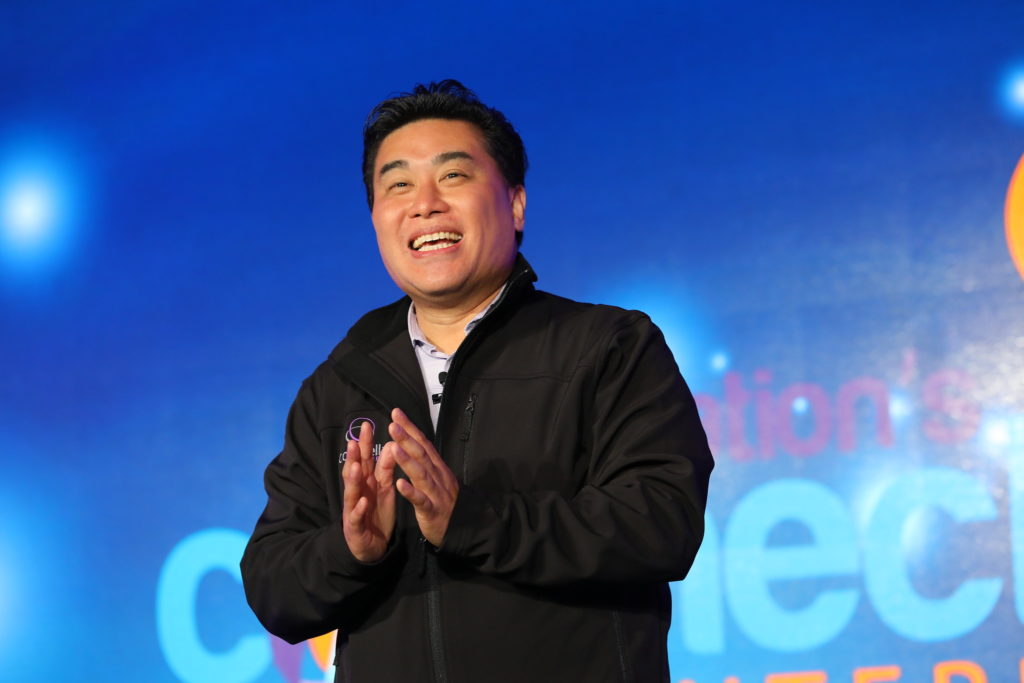
R “Ray” Wang, CEO and founder of Constellation Research, brings decades of insight into enterprise technology to our
Show moreShow lessR “Ray” Wang, CEO and founder of Constellation Research, brings decades of insight into enterprise technology to our podcast. As the head of one of the most respected tech research firms, Ray has a unique vantage point on the intersection of AI and digital transformation. With a background spanning consulting at Deloitte, key roles at Oracle and Peoplesoft, and pioneering tech research at Forrester, Ray has witnessed firsthand the evolution of AI in enterprise software.
He’s also the host of Disrupt TV, a live-streamed show reaching over 130 million impressions monthly. Known for his thought leadership on platforms like CNBC, Fox Business, and Bloomberg, Ray explores the big picture of AI—highlighting how its decentralization, variability, and potential are reshaping the future of work.
In this conversation, we discuss:
- Why decentralized human intelligence serves as the best model for AI and how human variability challenges centralized AI systems.
- The gap between visionary AI vendors and those unprepared for market demands, and how this disparity impacts success.
- The challenges of achieving data precision for AI-driven decision-making and how it varies across industries.
- A future of cross-industry data sharing, where companies collaborate across value chains to better predict inventory, demand, and pricing.
- Wang’s perspective on the five maturity levels of AI and what each level represents in enterprise evolution.
- How cultural values and biases shape AI regulation, and the tension between centralized oversight and allowing AI vendors to self-assess.
Resources
-
Episode Number : 311
Holger Mueller is a Vice President and Principal Analyst at Constellation Research, specializing in the future of work
Show moreShow lessHolger Mueller is a Vice President and Principal Analyst at Constellation Research, specializing in the future of work and human capital management. With over three decades in enterprise software, including leadership roles at Northgate Rinsau, SAP, FICO, and Oracle, Holger brings a wealth of industry experience to his analysis. Known for his thought-provoking insights, Holger covers the latest trends in enterprise automation and cloud technologies, often sharing timely updates on his social media. He holds degrees in Information Science, Marketing, International Management, and Chemical Technology from the University of Mannheim and is fluent in six languages.
In this conversation, we discuss:
- Holger’s perspective on the rapid evolution of AI in enterprise technology and its impact on the future of work.
- The transformative role of cloud infrastructure, now hosting the majority of enterprise automation, and its implications for faster adoption cycles.
- The contrasting approaches to AI regulation, highlighting how some concerns around “ethical AI” stem from companies still lacking AI capabilities.
- The concept of “enterprise acceleration” and why agility, efficiency, and effectiveness are crucial for modern organizations to thrive.
- Insights on the ethical considerations in tech, emphasizing the strength of values and ethics over the pitfalls of excessive regulation.
- How “innovation gravity” shapes industry hotspots like Silicon Valley, driving technology forward and fostering the next wave of advancements.
Resources
Subscribe to the AI & The Future of Work Newsletter: https://aiandwork.beehiiv.com/subscribe
Connect with Holger: https://www.linkedin.com/in/holgermueller/
AI fun fact article: https://www.itpro.com/technology/artificial-intelligence/the-ai-hype-cycle-separating-fact-from-fiction
-
Episode Number : 310
Dr. Zohar Bronfman is the co-founder and CEO of Pecan AI, a company transforming predictive analytics with conversational
Show moreShow lessDr. Zohar Bronfman is the co-founder and CEO of Pecan AI, a company transforming predictive analytics with conversational AI to deliver rapid insights from custom data. Under his leadership, Pecan has raised approximately $120 million from investors, including Insight Partners and GV (Google Ventures). Dr. Bronfman holds two PhDs from Tel Aviv University in computational neuroscience and philosophy of science, has published 18 scientific papers, and has taught at the university level. A former member of the IDF’s elite 8200 intelligence unit, he combines technical expertise with a clear vision for both the present and future of AI.
In this conversation, we discuss:
- Dr. Zohar Bronfman’s journey from academia to becoming CEO of Pecan AI and the insights he gained along the way.
- The challenges companies face in leveraging machine learning and predictive analytics effectively in business contexts.
- Dr. Bronfman’s perspective on the differences between human intelligence and artificial neural networks, including the limitations of current AI models.
- Why Dr. Bronfman believes AI development should focus on enhancing human productivity rather than replicating human intelligence.
- The ethical implications of AI technology, including the role of regulation in preventing misuse of advanced predictive tools.
- The importance of curiosity and continuous learning, both in academic and business environments, to drive innovation in AI.
Resources
Subscribe to the AI & The Future of Work Newsletter
-
Episode Number : 309
Dr. Seth Dobrin, CEO of Qantm AI, is a leading authority in the AI business world. He was
Show moreShow lessDr. Seth Dobrin, CEO of Qantm AI, is a leading authority in the AI business world. He was IBM’s first-ever Global Chief AI Officer and is known for his human-centered approach to AI in corporate strategy, culture, and talent. With a PhD in Molecular and Cellular Biology from Arizona State University, Dr. Dobrin’s early work focused on developing algorithms for large-scale genetic data analysis, later transitioning to business solutions at companies like Monsanto and IBM. He now leads Qantm AI and is a key investor in responsible AI ventures.
In this conversation, we discuss:
- The role of responsible AI in corporate culture and how it impacts business strategies.
- Dr. Dobrin’s transition from molecular biology to AI and its applications in genetics and business.
- Insights into the future of AI regulations, including the challenges companies face in complying with emerging laws like the EU AI Act.
- The potential of AI to transform the workforce, creating both new job opportunities and eliminating existing ones.
- The ethical concerns surrounding AI, including attribution, bias, and technological colonialism.
- How conversational interfaces and AI-driven technologies will change the way we interact with the digital world in the next decade.
Resources
Subscribe to the AI & The Future of Work Newsletter
On the Future of Organizations and the Science of Team Performance
-
Episode Number : 308
Alex Tsakiris is the founder and host of the popular podcast Skeptiko, which has garnered millions of downloads over
Show moreShow lessAlex Tsakiris is the founder and host of the popular podcast Skeptiko, which has garnered millions of downloads over the years as it explores the intersection of science and spirituality. A published author, entrepreneur, and critical thinker, Alex has become a prominent voice in the debate surrounding the nature of consciousness and its connection to the physical world. In 1986, he founded MindPath Technologies, a pioneering company that developed AI expert systems for major corporations like Texas Instruments, DuPont, and Standard Oil, before it was acquired by Proxima Corporation in 1996.
In this conversation, we discuss:
- Alex Tsakiris’s journey from AI entrepreneur to host of the Skeptiko podcast, exploring the intersection of science and spirituality.
- The impact of AI on the concept of consciousness and how it challenges traditional scientific paradigms.
- The influence of Alan Turing’s work on AI consciousness and how it shapes today’s discussions on human-machine interactions.
- Why Alex questions AI dogma and how his background in expert systems influences his perspective.
- The role of transparency versus truth in AI development and how it shapes ethical considerations.
- Real-world AI applications that focus on enhancing human well-being and reducing workplace friction.
Resources
-
Episode Number : 307
Commissioner Keith Sonderling was confirmed by the U.S. Senate with bipartisan support as a Commissioner of the U.S.
Show moreShow lessCommissioner Keith Sonderling was confirmed by the U.S. Senate with bipartisan support as a Commissioner of the U.S. Equal Employment Opportunity Commission (EEOC) in 2020. Prior to this role, he served as the Acting and Deputy Administrator of the Wage and Hour Division at the U.S. Department of Labor. Before joining the Department of Labor in 2017, Commissioner Sonderling practiced labor and employment law in Florida. He currently lectures on employment discrimination at George Washington University Law School. At the EEOC, he prioritizes ensuring that AI and workplace technologies align with civil rights laws, and he has published extensively on the benefits and risks associated with AI in the workplace.
In this conversation, we discuss:
- Commissioner Keith Sonderling’s perspective on how AI is transforming HR and the role of the EEOC in regulating AI technologies in the workplace.
- The potential benefits of AI in reducing bias during employment decisions and its alignment with civil rights laws.
- Challenges in ensuring AI algorithms are designed and used properly to prevent discrimination in hiring and other HR processes.
- The importance of transparency and consent when using AI in hiring and promotion processes, including the emerging state and federal regulations addressing these issues.
- The role of employers in mitigating risks associated with AI by implementing self-regulation and bias audits before deployment.
- The complexities of holding different parties accountable for biased AI decisions, and why employers remain legally responsible for employment outcomes.
Resources
Subscribe to the AI & The Future of Work Newsletter
Keith Sonderling’s Paper “Filling the Void: Artificial Intelligence And Private Initiatives”
-
Episode Number : 306
Dan Helfrich is the Chair and CEO of Deloitte Consulting, where he leads a team of over 80,000
Show moreShow lessDan Helfrich is the Chair and CEO of Deloitte Consulting, where he leads a team of over 80,000 professionals. He frequently shares his expertise on topics such as the evolving consulting landscape, the future of work, and inclusive leadership. Before assuming his current role, Dan led Deloitte’s Government & Public Services division. A proud Georgetown University alum, Dan holds both a Bachelor of Science and an MBA from the school, where he is also known as the play-by-play announcer for the Hoyas men’s soccer team. Outside of work, Dan enjoys cheering on his talented kids from the sidelines of the soccer field.
In this conversation, we discuss:
- Dan’s role as CEO of Deloitte Consulting and his work at the intersection of enterprise transformation, technology, and change.
- How Deloitte Consulting is helping organizations like the International Olympic Committee reimagine fan experiences and digital transformation.
- The importance of agility in leadership, highlighting examples like Marriott Vacations Worldwide’s successful response to disruptions and Summit Coffee’s creative pivot during the COVID-19 pandemic.
- Insights from Deloitte’s global survey of 3,000 executives, revealing key trends in AI adoption, including the focus on productivity, cost efficiency, and the gap between intent and results.
- The challenges enterprises face with AI, including trust concerns, data privacy, and the uncertainty around ROI and long-term investment in AI technologies.
- Dan’s perspective on the future of AI, the regulatory landscape, and the critical role of leadership in navigating these disruptions.
Resources
Subscribe to the AI & The Future of Work Newsletter
Babak Hodjat, co-inventor of Siri, on AI and the Future of Work
-
Episode Number : 305
Matt Beane is a writer, professor, and advocate for fostering a harmonious coexistence between humans and machines in
Show moreShow lessMatt Beane is a writer, professor, and advocate for fostering a harmonious coexistence between humans and machines in the workplace. His influential TED Talk from 2018 has garnered over 1.8 million views, challenging conventional perspectives on AI’s role in the workforce by highlighting its divergence from traditional human skill acquisition. As a co-founder and financier of Humatics, an IoT startup connected to MIT, Matt frequently shares his insights in esteemed publications such as Wired, MIT’s Technology Review, TechCrunch, Forbes, and Robohub. His latest book, The Skill Code: How to Save Human Ability in an Age of Intelligent Machines, published by HarperCollins, has received accolades from notable figures like Adam Grant, Bob Sutton, Professor Ethan Mollick, and Reid Hoffman. Matt holds both a PhD and a master’s degree from MIT’s Sloan School of Management, along with a BA in philosophy from Bowdoin College. We are thrilled to welcome Matt to this episode of AI and the Future of Work.
In this conversation, we discuss:
- The winding, non-linear career path that led to Matt’s research on technology, skill-building, and the future of work—from dishwasher to high school math teacher to MIT researcher.
- How the advent of new technologies, like smartphones and email, changed workplace dynamics and the way teams interact.
- The “Skill Code” and the three Cs of learning—Challenge, Complexity, and Connection—and how these elements are crucial for building reliable skills under pressure.
- The difference between knowledge and skill, and why skill development requires more than just education—it requires real-world application, collaboration, and engagement.
- Matt’s ethnographic approach to understanding work in diverse settings, from warehouses to operating rooms, and how he builds trust to gain insights into how people perform their jobs.
- The role of motivation, human relationships, and trust in skill-building, and how these factors drive us to improve and master new tasks.
Resources
Subscribe to the AI & The Future of Work Newsletter
-
Episode Number : 304
Dave Smoley recently received a well-earned Lifetime Achievement Award (and signed Billy Idol guitar) from Workday co-founder Aneel
Show moreShow lessDave Smoley recently received a well-earned Lifetime Achievement Award (and signed Billy Idol guitar) from Workday co-founder Aneel Bhusri to recognize his 30 years of technology leadership.
This week, we discussed his journey from basement to boardroom as a leader at companies like Apple, AstraZeneca, GE, Honeywell, and Flex.
Dave shares unique insights about the impact of technology on the workplace and the evolving role of the CIO. Currently, he invests in and advises early-stage tech companies, leveraging his extensive expertise.
Dave holds a Bachelor of Science degree in Computer Science from Clemson University and an MBA from the Darden School at the University of Virginia. Thanks to friends of the podcast (and PeopleReign investors) Thomas and Jason from Acadian Ventures for the introduction.
In this conversation, we discuss:
- Dave’s early fascination with computers and how it influenced his interest in computer science.
- His experience transitioning from programming at a bank to pursuing an MBA and the lessons learned along the way.
- The pivotal moment at GE that rekindled his passion for technology, leading him to combine tech with business roles.
- His insights on the cultural differences between GE and Apple, particularly in leadership styles and organizational structures.
- The role of teamwork and specialized skills in today’s tech-driven industries, especially in the context of cloud computing and AI.
- His current ventures as an investor and advisor, including his work with companies like PeopleReign.
Resources
-
Episode Number : 303
Chris Caren, CEO of Turnitin since 2009, has played a pivotal role in transforming the company from a
Show moreShow lessChris Caren, CEO of Turnitin since 2009, has played a pivotal role in transforming the company from a plagiarism prevention tool to a comprehensive education technology platform that promotes academic integrity, streamlines grading, and enhances educational outcomes. Under his leadership, Turnitin was acquired by Advanced Publications in 2019 for $1.75 billion. Prior to Turnitin, Chris was General Manager of Business Solutions at Microsoft. He holds an MBA with distinction from Northwestern’s Kellogg School of Management and a BS in Engineering from Stanford and regularly contributes to CNBC and other media outlets.
In this conversation, we discuss:
- How a childhood introduction to computers and a background in science set the stage for a career in software.
- The journey from Microsoft to Turnitin and the decision to focus on meaningful industries like education.
- Insights into leadership, including the importance of team cultural fit and the power of delegation.
- Navigating the challenges of taking over from company founders while maintaining and respecting the company culture.
- How AI is transforming the educational landscape and Turnitin’s evolving role in addressing student misconduct with AI tools.
- The complex relationship between higher education and AI, balancing the need for students to learn writing and critical thinking with the demand for AI literacy in the workforce.
Resources
Subscribe to the AI & The Future of Work Newsletter
Connect with Chris
-
Episode Number : 302
Vijay is the co-founder and CEO of Pindrop, a leader in voice security technology. With a background in
Show moreShow lessVijay is the co-founder and CEO of Pindrop, a leader in voice security technology. With a background in engineering and research roles at Google, Siemens, IBM Research, and Intel, Vijay invented phone printing technology in 2010 and launched Pindrop in 2011. Under his leadership, Pindrop has raised over $200 million from investors, including JC2 Ventures, led by by Cisco’s John Chambers. Holding multiple patents in VoIP security and scalability, Vijay frequently speaks at major conferences such as RSA, Black Hat, and CCS. He earned his PhD in computer science from Georgia Tech.
In this conversation, we discuss:
- The evolution of voice technology from landline telephony to modern voice systems.
- The challenges of educating people about voice security and deepfake threats in the early 2010s.
- How the rise of Alexa and other voice assistants transformed public perception of voice technology.
- The rapid development of voice cloning tools and their implications for security.
- The role of deepfakes in political interference, including high-profile cases President Biden.
- How companies like Pindrop are using AI to detect and combat voice-related deepfake attacks in real-time.
Resources
Subscribe to the AI & The Future of Work Newsletter
How AI is reinventing networking with Cisco’s Dr. JP Vasseur
-
Episode Number : 301
William Osman is a prominent tech creator and inventive mayhem conjurer on YouTube, with over 3 million followers
Show moreShow lessWilliam Osman is a prominent tech creator and inventive mayhem conjurer on YouTube, with over 3 million followers and nearly 200 videos that have collectively amassed over half a billion views.
As the mastermind behind Open Sauce, a major creator community event that drew over 20,000 attendees, 500 exhibitors, and 150 celebrity creators, William has significantly impacted the tech and creator landscape. His engaging content, known for its bold experiments and Francis Ford Coppola-like editing, includes fan favorites such as “How Many Parts Can You Take Off a Car?” and “Can a Rented Raccoon Simulate Fatherhood?” William is also the cohost of the Safety Third podcast, with over a hundred episodes. He holds a BS in Mechanical and Electrical Engineering from Cal State Northridge. We’re thrilled to have him on AI and the Future of Work to discuss his unique journey and insights.
Topics in this episode —
- Exploring Early YouTube: In this conversation, we discuss the evolution of YouTube and content creation from its early days, reflecting on how the tools and community have changed over the years.
- From Engineering to Entertainment: We delve into the guest’s journey from making simple, personal videos to integrating engineering with entertainment, and how this unique blend led to their success on YouTube.
- Challenges of Early Content Creation: The guest shares insights on the early challenges of making videos, including the limited tools available in 2008 and the lack of a robust creator community.
- The Role of Storytelling in Videos: We discuss the shift from focusing solely on technical aspects of video production to emphasizing storytelling, and how this transition impacted the guest’s content and audience engagement.
- The Impact of Open Sauce: The guest reflects on the vision behind Open Sauce, an event celebrating nerd culture and the maker community, and how it represents a sociological shift in connecting like-minded individuals.
- Creative Process Insights: We dive into the guest’s creative process, exploring how they generate ideas, choose which projects to pursue, and how they use engineering problems to drive compelling narratives in their videos.
Resources
-
Episode Number : 300
Pankaj Kedia is a trailblazer in laptop and wearable technology, having held leadership roles at Intel and Qualcomm
Show moreShow lessPankaj Kedia is a trailblazer in laptop and wearable technology, having held leadership roles at Intel and Qualcomm in the early 2000s. Now an active investor, advisor, mentor, and speaker, Pankaj founded 2468 Ventures in 2021 and has since made angel investments in notable companies such as Grok, Anthropic, OpenAI, Figure, Humane, and Athena. Recently appointed as Chief AI Officer and board member at Biosmon, a Mexican med tech company, Pankaj brings a wealth of experience and expertise to the AI space. He holds engineering degrees from IIT Roorkee and the University of Michigan, along with an MBA from Wharton.
In this conversation, we discuss:
- The journey of transitioning from early AI work in the 1980s to becoming a key player in the wearable revolution.
- Leadership lessons learned from working with iconic leaders like Andy Grove at Intel and Irwin Jacobs at Qualcomm.
- The evolution of wearable technology and its role in augmenting human capabilities through AI.
- The ethical implications and potential risks associated with the integration of AI in wearable devices.
- Insights into the mindset and qualities of successful AI entrepreneurs and the criteria for investing in disruptive technologies.
- Predictions about the future of work, the rise of AGI, and the shift towards an age of abundance where work becomes a choice rather than a necessity.
Resources
Subscribe to the AI & The Future of Work Newsletter
Babak Hodjat, co-inventor of Siri, on AI and the Future of Work
-
Episode Number : 299
Josh Allan Dykstra is a polymath and TEDx speaker who has made significant contributions as a published author,
Show moreShow lessJosh Allan Dykstra is a polymath and TEDx speaker who has made significant contributions as a published author, musician, and CEO. As a sought-after coach on the future of work, Josh has collaborated with industry giants like Amazon, Microsoft, Apple, and Chanel. He founded The Work Revolution, an organization dedicated to creating energy-based workplaces where teams can thrive, believing that work life can be a source of positivity. Josh is also the author of “Igniting the Invisible Tribe,” and his boundless energy and innovative approach have inspired many to rethink their work and lives.
In this conversation, we discuss:
- Josh’s journey from a classically trained musician to becoming a leading voice in the future of work.
- We explore the pivotal moment that led Josh to shift his focus from music to transforming the workplace.
- Josh shares his vision for an energy-based work system that empowers employees rather than draining them.
- The concept of a work revolution and what it means to completely turn around traditional work systems.
- Josh’s belief that work can be a force for healing the world, even amid global challenges.
- The potential of AI in the workplace and how leaders can prepare for the future while prioritizing human well-being.
Resources